

Coaching Girls
The daughter who does everything right is often the one working the hardest to feel okay.
Teachers love her. Coaches count on her. Her grades are strong. And at home you see what everyone else misses - the meltdown over an A-minus, the hours redoing work that was already good, the spiral after one unkind comment.
Does your daughter…
Fall apart over a grade, a roster cut, or one comment from a friend?
Redo work that was already good enough?
Need reassurance no matter how well things are going?
Measure herself against every girl in the room - and every girl online?
Seem confident in public and exhausted in private?
What's underneath it
Her inner critic is loud because it's guarding one question: am I enough? When a girl's worth rides on the next grade, the next team, the next post, her mind never gets to rest. She works harder. The finish line moves. She works harder still.
Coaching at Positively Healthy is built on enoughness - the settled sense of worth that doesn't have to be earned. When that question settles, the perfectionism loosens, the comparison quiets, and effort starts coming from purpose instead of fear.
How we work
In weekly one-on-one sessions, your daughter learns to:
Regulate her stress response with practical, science-backed tools she can use before a test, a tryout, or a hard conversation
Catch the inner critic and answer it with something truer
Separate who she is from how she performs
Build her identity on her character strengths instead of her latest results
Keep the habits - sleep, movement, phone boundaries - that hold up under pressure
Most teen coaches are trained in life coaching alone. Our holistic approach works with the mental, emotional, physical, and spiritual pillars of well-being together, because they rise and fall together.
A note on serious situations: bullying, harassment, and online cruelty deserve their own response. That's why we founded the This is NOT Okay movement and Parent Pledge. Learn more and take the pledge →
One-on-one coaching gives your daughter something rare: a room where nobody is scoring her. She brings the pressure. She leaves with tools she'll use before the next test, the next tryout, the next hard conversation - and week by week, a steadier answer to the question underneath it all.
And you get your daughter back. Fewer blowups over homework. Fewer reassurance loops at bedtime. More of the girl you know is in there showing up at the dinner table. You'll stay in the loop on what she's learning, so home can reinforce it.

Why smart girls hold on to the pressure
Here's the part most parents don't expect: your daughter may not want to let go of it. In her mind, being hard on herself is the reason for the grades, the spot on the team, the praise. If she eases up, she falls behind. That fear is completely normal - and it shows you how tightly her worth and her performance have fused.
Coaching starts right there. We don't push her to change. We get curious together about what the pressure has been doing for her and what it has been costing her. When she can see both clearly, the motivation becomes hers. Change she owns is change that lasts.
Whole-girl coaching, built on four pillars
Most coaches who work with teens are trained in life coaching alone. Our approach goes further on purpose. The mental, emotional, physical, and spiritual pillars of well-being rise and fall together - a girl running on five hours of sleep will lose an argument with her inner critic that she'd win rested. So we work with all four: her thoughts, the emotions and nervous system underneath them, the daily habits that hold her up, and the deeper question of who she is beyond what she produces. Working the pillars together is why the change holds.

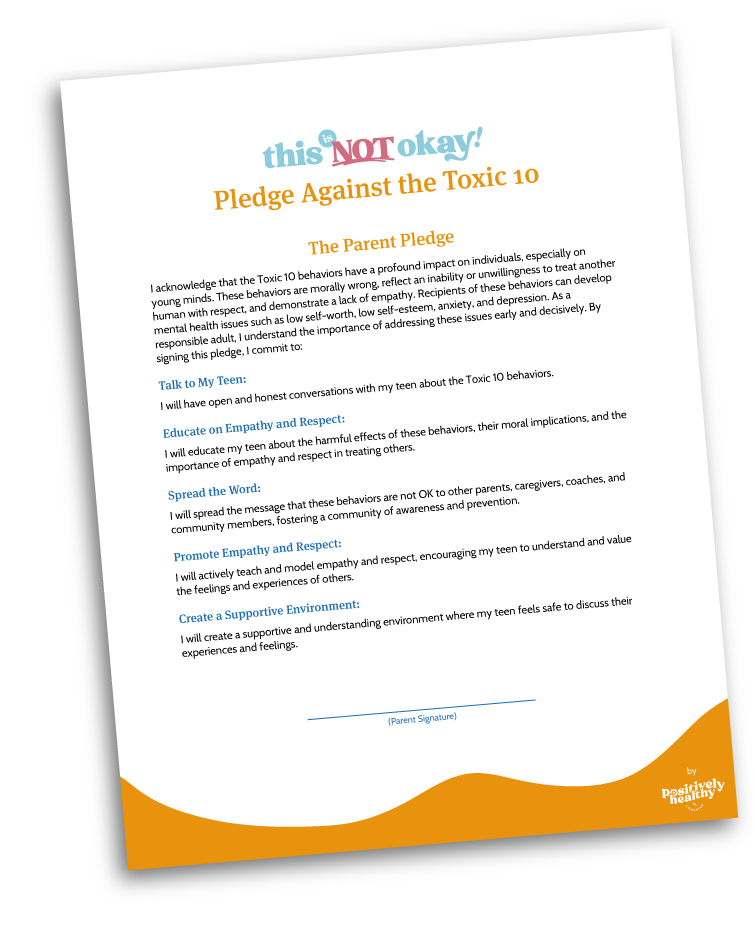
A note on serious situations: bullying, harassment, and online cruelty deserve their own response. That's why we founded the This is NOT Okay movement and Parent Pledge. Learn more and take the pledge →
FAQs
-
The tools come fast - within the first few sessions your daughter will have practical skills for regulating stress and answering her inner critic, and most girls start using them right away. The deeper change comes in weeks. You'll usually notice it indirectly: a test that would have caused a meltdown doesn't. A hard practice gets talked about at dinner instead of behind a closed door. Every girl's timeline is her own, and we measure progress together along the way so you're never guessing. The tools are hers for life.
-
We meet virtually for weekly 55-minute sessions. Your daughter and I co-create a plan around her specific goals, measure progress as we go, and adjust when needed. You also get monthly parent sessions, so you know what she's learning and can reinforce it at home. Change holds best when home speaks the same language.
-
They do different jobs. Therapy treats trauma and diagnosable mental health conditions, and it builds coping skills for managing hard emotions - that treatment belongs with a licensed clinician. Coaching is results-based skill building with a defined start and end, focused on the pressures your daughter faces now: perfectionism, comparison, confidence, performance stress.
In our work, tools are only half the goal. Coping helps your daughter get through the moment. Lasting change comes from working on the beliefs underneath the pressure - what she believes about her worth - so over time there's less to cope with in the first place. If I ever believe your daughter needs therapy, I will tell you directly and help you find the right fit. Some girls do both at once - a therapist for treatment, coaching for the beliefs and skills - and the two work well together.
-
This is the question underneath every other question, so let's answer it directly. No. Her edge comes from her standards, her strengths, and how much she cares. Those stay. The pressure was never the source of her success - it just showed up at the same time and took the credit.
Fear-driven pressure does produce results, which is exactly why she trusts it. But look at the bill: anxiety before every test, a crash after every result, and shrinking joy in things she used to love. Fear also has a breaking point. It works right up until the first real failure, and then it takes her confidence down with it.
When her worth is settled, the standards stay high and the tax goes away. She still prepares hard. She still wants the A and the starting spot. What changes is what happens when she falls short. A bad result stings, then it teaches. It stops being a verdict on who she is. That's how she takes bigger swings, recovers faster, and keeps her love for the thing she's good at. Purpose carries her further than fear, and it doesn't cost her health along the way.