
Why Teenagers Take Sides in Divorce: Understanding Parental Alienation
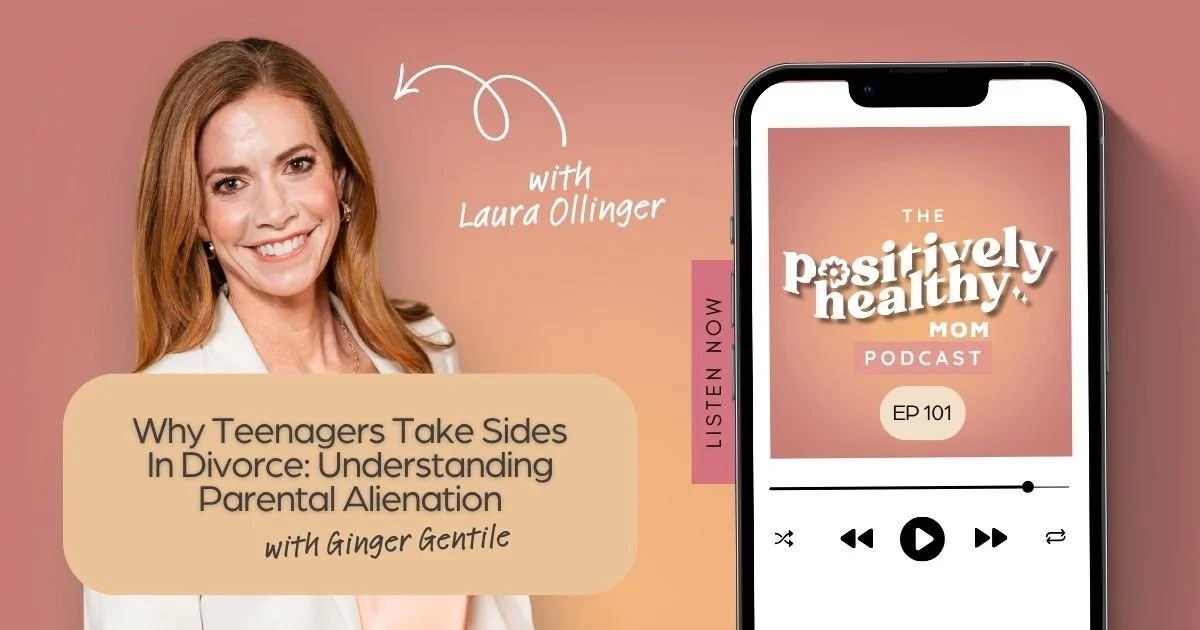
For some parents of teens and young adults, divorce doesn't bring the "peace" they expected. Instead, it marks the beginning of a high-conflict dynamic where the child begins to pull away, or worse, chooses a side.
In this episode of The Positively Healthy Mom, host Laura Ollinger sits down with Ginger Gentile, director of the documentary Erasing Family and a leading expert in reversing parental alienation. They dive deep into why teenagers are uniquely vulnerable to "loyalty binds" and how parents can stop the cycle of conflict to reconnect with their children.

Why Do Teenagers Take Sides in Divorce?
According to Ginger Gentile, teenagers often take sides as a survival mechanism to avoid conflict. Unlike younger children, teens can be influenced by "rewards"—such as a lack of rules at one house—or by a promise of material items for avoiding the opposite parent.
When a teen "chooses" a parent, it is often an attempt to simplify a high-stress emotional environment. By aligning with one side, they effectively end the tug-of-war, even if it means sacrificing a healthy relationship with the other parent.
What is Parental Alienation?
Parental alienation (also referred to as emotional triangulation or resist and refuse dynamics) occurs when one parent’s actions—whether conscious or subconscious—damage the child’s relationship with the other parent.
While many parents might slip up occasionally, alienation becomes a destructive pattern characterized by "micro-actions," such as:
Hiding or belittling gifts from the other parent.
Using first names instead of "Mom" or "Dad" to diminish the parental bond.
Creating loyalty binds by saying, "You don't have to go if you don't want to," or scheduling fun events during the other parent's time.
How to Stay "Unbothered" and Reconnect
If you are the "rejected" parent, your natural response might be desperation or anger. However, Ginger warns of the "Spiral of Instability." When a parent reacts emotionally to the injustice of alienation, the high-conflict parent often uses that reaction as "evidence" in court to label them unstable.
To break this cycle, parents must adopt the "Unbothered" Strategy:
Process Pain Privately: Schedule time to cry or vent to a coach, but stay regulated in front of your teen and your ex.
Don’t Board the "Crazy Town" Train: A high-conflict person provides an express train to chaos. You don’t have to get on. Let the train go by itself.
Focus on Personal Responsibility: You cannot control the other parent, but you can control how you show up. Be the calm, safe harbor your teen needs.
Breaking the Generational Cycle
Children who witness or experience alienation have a 50% higher chance of repeating these patterns in their own adult relationships. By choosing to stay calm and refusing to engage in the "smear campaign," you aren't just protecting your current relationship—you are teaching your child how to handle high-conflict people in the future.
Common Question About Teen Reconnection
Can parental alienation be reversed? Yes. Reversal starts with the parent changing their own dynamic. When you stop acting like a victim and start acting as an empowered, regulated leader, the "system" of the family begins to shift.
About the Ginger Gentile
Ginger Gentile is a filmmaker and coach dedicated to reuniting families. Her work with Erasing Family has helped thousands of parents move away from the "victim trap" and toward meaningful reconnection. Ginger’s mission is simple yet powerful: to give you the proven strategies, compassionate guidance, and unwavering support you need to heal and reconnect with your child as you are going through divorce, custody battles, family court injustice, dealing with a toxic ex, co-parenting with a narcissist, estrangement or years of no-contact.
Learn more:reversingparentalalienation.com
Watch:YouTube @erasingfamily
Connect on IG:@erasingfamily
Resources from Laura Ollinger
The end of the school year is a high-trigger season for families in transition. Don’t let the "May-Crazies" overwhelm you.
Free Webinar: Get Through May Without Losing Your Joy, Your Mind, Or Yourself
Connect on Instagram:@positivelyhealthycoaching
Did you find this episode helpful? Rate the Positively Healthy Mom podcast here!